
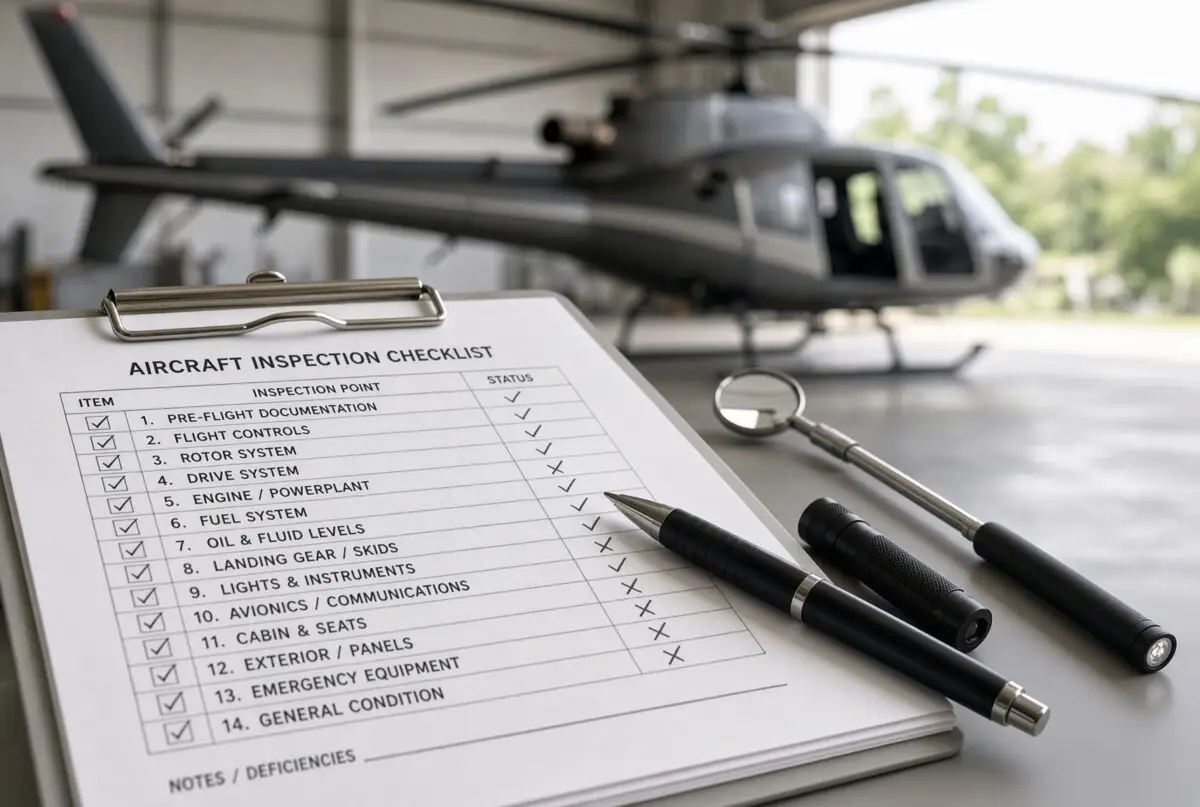
Pre-Purchase Inspection Checklist for Aircraft Buyers
A pre-purchase inspection (PPI) is one of the most important steps when buying an aircraft.
It is not just a walk-around. A proper inspection looks at the airframe, engine, systems, records, and how the aircraft actually flies. Skipping it, or doing it poorly, is one of the fastest ways to buy someone else’s problem.
If you want a printable version, you can download the Pre-Purchase Inspection Checklist here.
This checklist is a starting point. Adapt it to the type of aircraft you are buying (helicopter, fixed-wing, or VTOL) and complete it with a qualified inspector.
We also have a separate guide on how to handle pre-purchase inspections without getting stressed.
Before You Start
- Use a qualified aircraft mechanic or inspector, not just a friend who “knows aircraft”
- Review the logbooks and runout first
- Confirm Airworthiness Directives and service bulletins
- Decide in advance who pays for the inspection and any follow-up work
The registered owner is still legally responsible for airworthiness. A PPI does not replace that — it helps you understand what you are buying.
1. Aircraft and Owner Details
Record the basics first:
- Registration number and expiry
- Make, model, and serial number
- Engine and propeller/rotor times (SMOH, remaining life, last overhaul)
- Owner details and location of the aircraft
- Inspection date
If this information is incomplete before you start, that is already a warning sign.
2. Exterior
Check:
- Overall condition
- Damage, corrosion, or excessive wear
- Wings/rotor system, fuselage, tail, and control surfaces
- Paint and exterior coatings
- Exterior lights (landing, navigation, strobes)
- Windows and windshield
- Tyres and landing gear
Look for what has been repaired, not just what looks shiny.
3. Interior
Check:
- Seats, upholstery, and interior panels
- Carpet and flooring
- Cabin heating and ventilation
- Interior lights and cabin electronics
- Cockpit layout and instrumentation
Interior condition often tells you how the aircraft has been treated day to day.
4. Engine and Propeller / Rotor System
This is where many expensive surprises hide.
Review:
- Engine and propeller/rotor logbooks
- Engine compartment for leaks, corrosion, or damage
- Engine mounts and attachments
- Engine controls and throttle response
- Propeller blades or rotor blades for nicks, scratches, or damage
- Hub and attachment hardware
Do not rely on a visual look only. The records and the physical condition need to match.
5. Avionics and Electrical
Test:
- Radios, GPS, transponder, and autopilot
- Navigation instruments
- Electrical system voltage and current
- Wiring and connections for wear or corrosion
- Audio and intercom
Avionics problems are common and can be costly to put right after purchase.
6. Systems and Components
Inspect:
- Fuel system for leaks, corrosion, and correct operation
- Landing gear operation (if retractable)
- Brakes and hydraulic systems
- Flight controls for correct movement and alignment
- Environmental systems
- Aircraft documents and maintenance records
7. Flight Test
A paper inspection is not enough.
A proper PPI should include:
- A thorough pre-flight
- Engine run-up and taxi checks
- A test flight to assess performance, handling, and avionics
- Engine performance, temperatures, and fuel burn
- Written notes on anything unusual
If the seller will not allow a proper flight test with a qualified pilot/inspector, treat that as a red flag.
8. After the Inspection
- Get a written report of findings
- Compare the findings with the asking price
- Decide what must be fixed before purchase
- Do not accept verbal assurances in place of paperwork
If the aircraft is being sold “as is, where is”, the inspection matters even more. Once you buy, the condition is yours.
Important Note for Sellers
If you are selling, a clean, organised aircraft with a complete runout and tidy records makes a PPI much less stressful. Buyers are more confident, and negotiations stay cleaner.
Download the Pre-Purchase Inspection Checklist (Word)
Bottom Line
A pre-purchase inspection is not about finding a perfect aircraft. It is about knowing exactly what you are buying before money changes hands.
Use a proper checklist, use a qualified inspector, and do not rush the records or the flight test.