
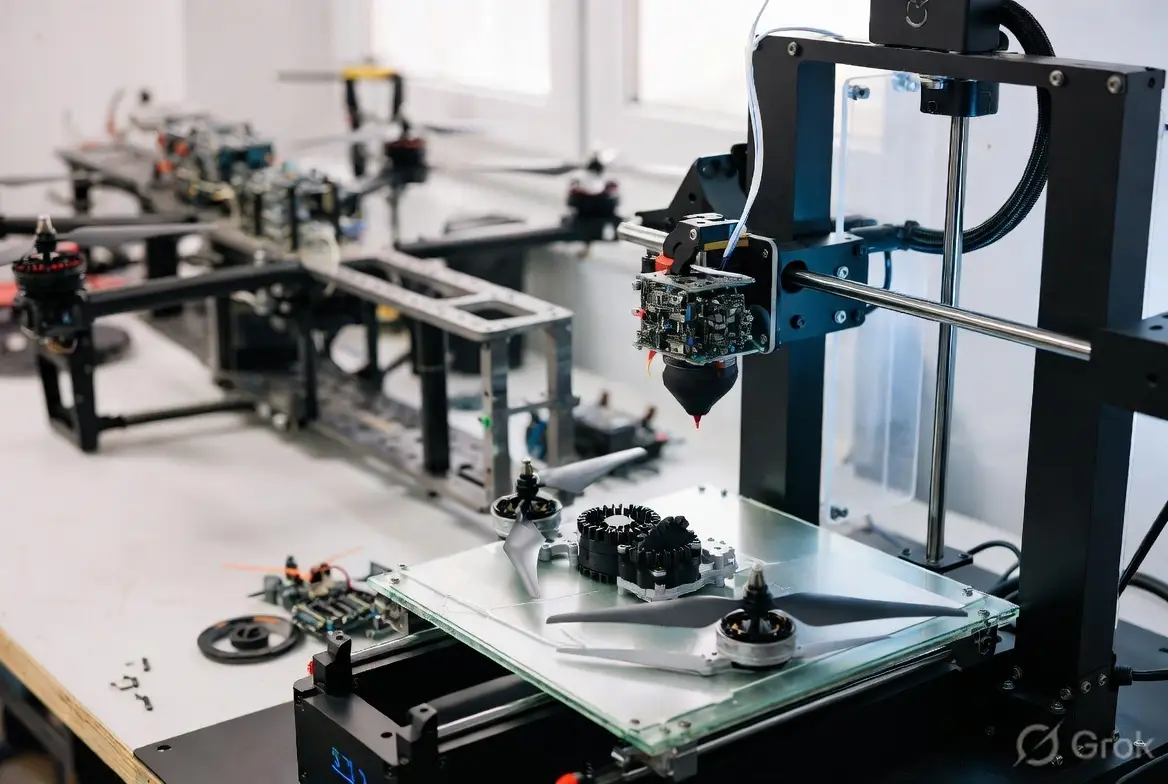
If you’re building a custom drone — especially something more advanced or after purchasing online kits and plans — your choice of 3D printer matters a lot more than most people realise.
When you’re designing gearboxes, rotor arms, bell cranks, mounts, and test rigs, you need a machine that can produce functional, repeatable parts quickly. You’ll be iterating often, sometimes printing the same part multiple times with small design changes. Speed, reliability, and part strength become more important than just pretty prints.
After testing and researching current options, here are four printers that stand out for drone prototyping work in 2026:
1. Bambu Lab X1-Carbon
The Bambu Lab X1-Carbon has become one of the most popular printers among people building serious functional projects — and for good reason.
For drone work, its biggest strengths are speed and reliability. When you’re testing new gearbox designs or rotor arm concepts, being able to print a part in a few hours instead of overnight makes a massive difference. The CoreXY design and advanced sensors mean it rarely fails mid-print, which is important when you’re printing structural parts that need to be accurate.
The X1-Carbon also handles engineering filaments well (PETG, Nylon, and carbon fibre-filled materials). This is useful when printing rotor arms or gearbox housings that need to handle stress and vibration. The AMS (Automatic Material System) is a nice bonus if you want to print multi-colour parts or easily switch between different materials during testing.
Downsides: The build volume (256 × 256 × 256 mm) is relatively small. For a 1-metre class drone, you’ll need to split longer parts (like rotor arms) into sections. However, this is standard practice anyway.
Best for: People who value speed and reliability while prototyping mechanical systems.
2. Creality K1 Max
The Creality K1 Max offers a larger build volume (300 × 300 × 300 mm) at a more accessible price point than the Bambu Lab.
For drone builders, the extra space is genuinely useful. You can print longer rotor arm sections or larger gearbox housings in fewer pieces. This reduces assembly time and potential weak points.
It’s also fast (CoreXY architecture) and has good out-of-the-box performance. Many people building larger drones appreciate the balance between size, speed, and cost.
However, it doesn’t quite match the Bambu Lab in terms of reliability and refinement. You may need to do more calibration and occasional troubleshooting. The stock firmware and software are also not quite as polished.
Best for: Builders who want more build volume without spending top dollar, and who don’t mind occasional tinkering.
3. Anycubic Kobra 2 Max
The Anycubic Kobra 2 Max stands out because of its large build volume (420 × 420 × 500 mm). This is one of the biggest printers in its price range.
For someone building a 1m+ drone, this extra space can be very convenient. You can print longer continuous parts, which reduces the number of joints in rotor arms or structural components. It’s also relatively fast for its size.
On the downside, larger printers tend to have more issues with bed levelling, vibration, and consistency across the entire build plate. While the Kobra 2 Max performs well for the price, it doesn’t match the Bambu Lab’s reliability or ease of use.
Best for: People who regularly need to print large parts and are willing to accept slightly more maintenance in exchange for build volume.
4. Elegoo Neptune 4 Max
The Elegoo Neptune 4 Max is another large-format option (also around 420 × 420 × 480 mm). Elegoo has been improving their machines significantly, and this model offers good speed thanks to its Klipper-based firmware.
Like the Anycubic, the main advantage is the large build volume. This can reduce the number of printed sections needed for long drone components.
However, like most large bedslingers or CoreXY machines in this price bracket, it requires more user attention than a Bambu Lab. Print quality and reliability are generally good but not class-leading.
Best for: Makers who want maximum build volume on a budget and are comfortable with some calibration work.
Quick Comparison
| Printer | Build Volume | Speed | Reliability | Ease of Use | Best For | Approx. Price Range (Japan) |
|---|---|---|---|---|---|---|
| Bambu Lab X1-Carbon | 256 × 256 × 256 mm | Excellent | Excellent | Excellent | Fast, reliable functional parts | Higher |
| Creality K1 Max | 300 × 300 × 300 mm | Very Good | Good | Good | Good balance of size and speed | Medium |
| Anycubic Kobra 2 Max | 420 × 420 × 500 mm | Good | Average | Average | Large parts on a budget | Medium |
| Elegoo Neptune 4 Max | 420 × 420 × 480 mm | Good | Average | Average | Maximum build volume | Medium |
Final Recommendation
If your main goal is to move fast while designing and testing mechanical drone components (gearboxes, tilting mechanisms, rotor systems, etc.), I would go with the Bambu Lab X1-Carbon.
The time you save from faster prints and higher reliability is significant when you’re iterating on complex parts. While the build volume is smaller than the others, you can work around this by designing parts in sensible sections — something you’ll likely do anyway with a 1m drone.
The Creality K1 Max is a solid second choice if you want a bit more build volume without spending as much. The two larger printers (Anycubic and Elegoo) only make sense if you regularly need to print very long single pieces.