
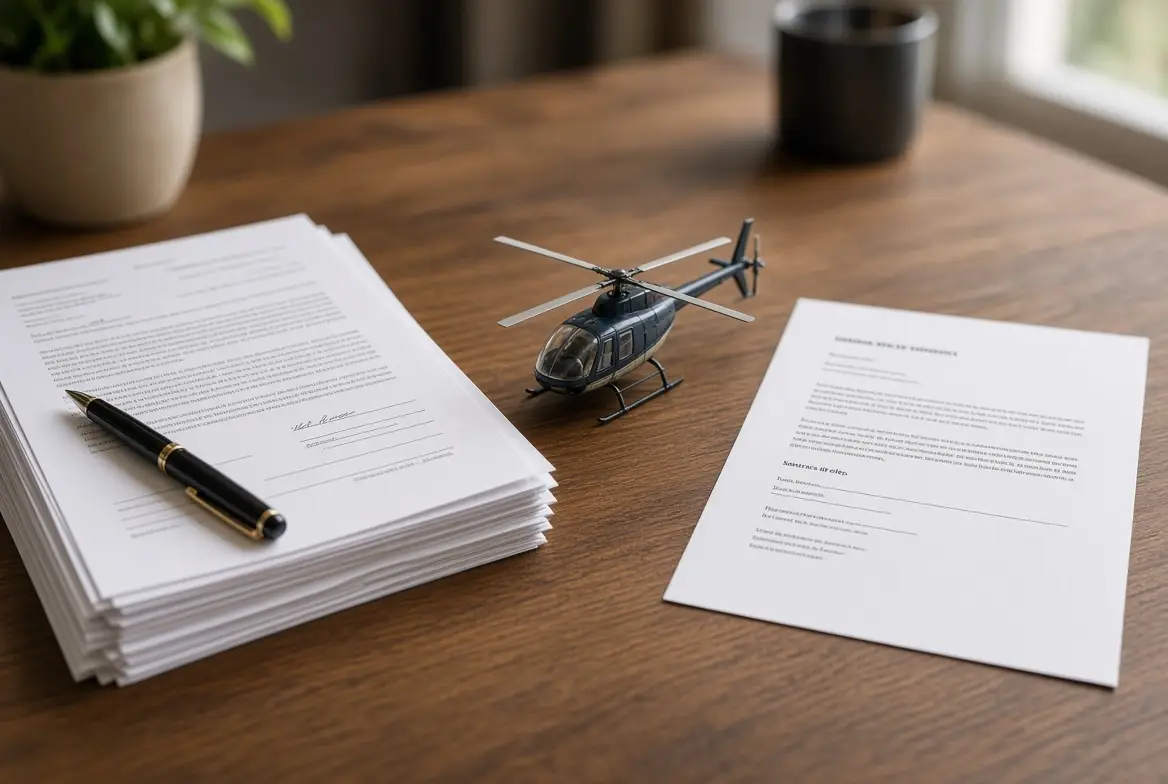
An aircraft sale uses two papers. People mix them up. One is the deal. The other is the transfer.
The sales agreement is the contract. The buyer and the seller sign it after the inspection, or after the buyer has chosen to buy the aircraft as it stands. It sets the price, the deposit, the balance, and when the buyer takes the aircraft.
The aircraft bill of sale is not that contract. It is the short transfer paper. It says the seller has sold the aircraft to the buyer. The buyer lodges it with the aviation authority, together with that country’s own transfer form.
Do not sign the bill of sale with the sales agreement. Sign it only after the balance has cleared in the seller’s account.
The order
Title and risk pass when the buyer takes the aircraft, after the balance has cleared. Not when the sales agreement is signed.
What each paper does
The sales agreement can name an agent. The agent holds the deposit. The buyer still pays the balance to the seller. The agent does not take title.
The bill of sale identifies the aircraft from the data plate: make, model, serial number, registration. It does not replace the authority’s own form. CASA, the FAA, Transport Canada, and the national authorities in Europe each have their own. Lodge those as well.
Logbooks stay with the aircraft. They are not posted. The data plate stays on the airframe.
Downloads
These are templates. Have them checked for the country where the sale is completed.
You can list your ads on VTOLmarket.io for just $3.50 per month (up to 10 active ads).