
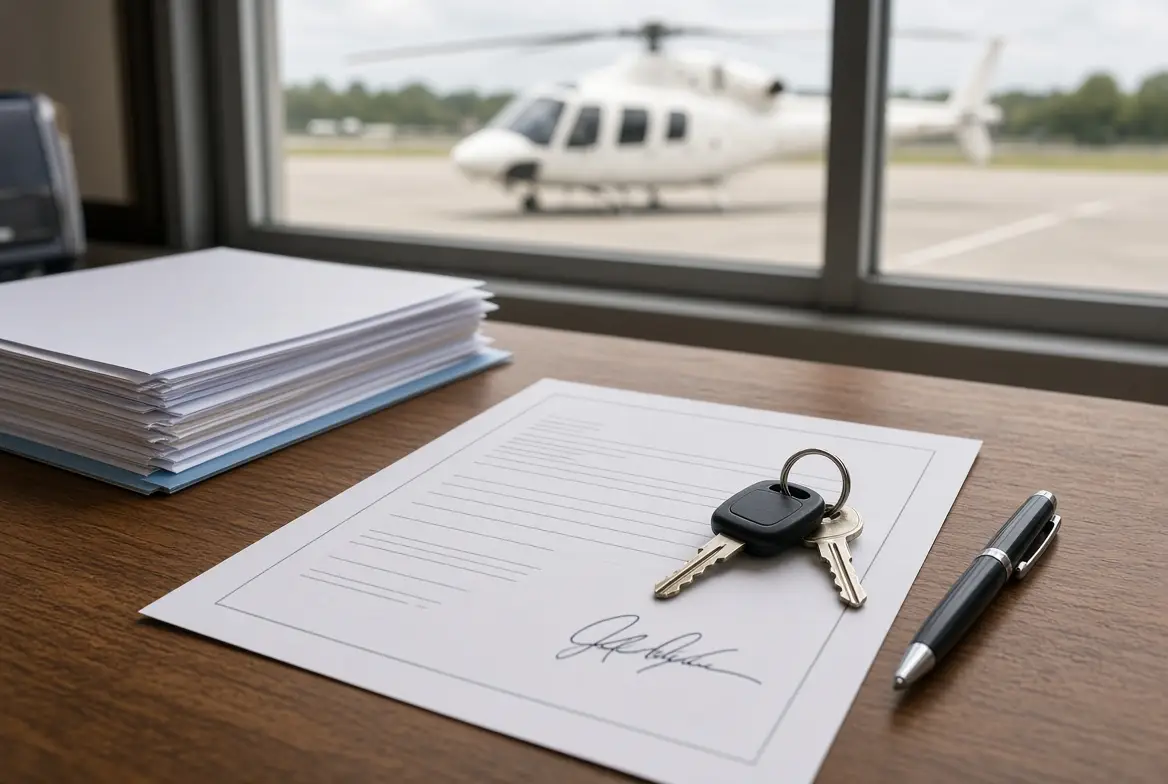
A lot of aircraft deals get messy at the deposit stage.
The buyer wants to show they are serious. The owner does not want the aircraft tied up forever. Somebody has to hold the money. And nobody should pretend a deposit is the same thing as a contract of sale.
That is why this form exists.
It is a simple, refundable deposit form. An agent holds the money. Both sides know where they stand. If the sale does not go ahead, the deposit comes back.
You can download it free from Resources & Templates.
Why it is a deposit form, not a “letter of intent”
A letter of intent sounds official and often isn’t.
People search for deposits because that is what they are actually trying to do: pay money to show they are serious, then look at the aircraft properly.
So the form is named for what it is. A refundable aircraft sales deposit. It is not the sale. Ownership does not move until a separate contract of sale is signed and the balance is paid.
Why the agent holds the money
The deposit should not go straight to the owner.
If it does, and the deal falls over, getting it back can turn into an argument. The agent is the middle person. Anyone acting fairly between a buyer and a seller can be that agent.
The deposit should be held safely and kept separate. That protects the buyer if the sale does not proceed. It also protects the agent’s agreed commission if the sale does proceed.
That is why the form asks for the agent’s:
- name
- company and registration number
- registered address
- email and phone
- bank details
If someone is holding the money, both sides should know exactly who they are and where the funds went.
Why there are three steps
The form is not current until all three steps are done. That stops one person signing and assuming the aircraft is on hold.
Step 1 — Buyer
The buyer signs, pays the deposit to the agent, and sends proof of payment. A promise is not enough. Evidence of the transfer matters.
Step 2 — Owner / representative
The registered owner, or someone signing for them, agrees to hold the aircraft while the form is current. During that time it will not be sold to another party.
Step 3 — Agent
The agent signs last. That is deliberate. The agent should only confirm after the money is in and both sides have signed. Then the agent sends a completed copy to each party so nobody is working off a different version.
Why the aircraft is held, but not locked away forever
A deposit has to mean something, or there is no point taking it.
While the form is current, the owner holds the aircraft and will not sell it to someone else. That gives the buyer a fair window to do the pre-purchase inspection.
It does not mean the rest of the world disappears. Other interested parties may still view the aircraft as an expression of interest. What this stops is the owner completing another sale while this buyer is already in process.
The form stops being current when:
- the deposit is returned
- a contract of sale is signed
- the arrangement is ended because the buyer delays, or because the owner asks for it to end
Once it is no longer current, the owner is free again.
Why viewing and inspection are organised together
If a deposit is in, there is no good reason to do a casual look one week and a proper inspection the next.
That just stretches the hold. So the form treats the viewing and the pre-purchase inspection as one organised visit. A demonstration flight can be part of the same day.
The buyer pays for the inspection and any travel. That keeps the cost where it belongs.
Why the dates are only a guide
Hard dates look neat on paper and rarely survive a real aircraft sale.
People travel. Hangars change. Inspectors are busy. So the form asks for the buyer’s proposed pre-purchase inspection date, and other suitable dates if needed. Those dates are flexible, a guide only, and given in good faith.
If the buyer then goes quiet, misses the visit, or stretches it out with no next step, the owner can end the arrangement and the deposit comes back.
Why the owner can also ask to end it
A hold has to work both ways.
If the buyer is not moving, the owner should not be stuck. The form lets the arrangement end if the buyer delays without a fair reason, and/or as requested by the owner. In either case the agent returns the full deposit.
That is the point of a refundable deposit. It is not a trap for either side.
How the deposit comes off the sale price
If the sale goes ahead, the deposit comes off the agreed sale price.
That does not mean the owner receives the whole deposit.
The agent holds the deposit. The buyer pays the remaining balance when the sale completes. The agent then pays the owner the deposit, less the commission already agreed with the owner.
The deposit is often set high enough to cover that commission and to show the buyer is serious. It should be held safely until the sale completes or the money is returned.
This form does not set the commission. That is usually in a separate aircraft agent or brokerage agreement between the owner and the agent.
Why this is not the sale contract
A deposit form should stay short.
The final price, extra inspections, delivery, and transfer of ownership belong in a separate contract of sale. The commission belongs in the agent agreement with the owner.
Use this form first. If both sides still want to proceed after the inspection, move to the sale agreement.
Bottom line
The form was written this way to keep the deal fair while everyone is still looking.
The buyer proves they are serious. The owner holds the aircraft for a short time. The agent holds the money, keeps both sides informed, and is paid from the completed sale as already agreed with the owner.
Dates stay flexible. The deposit stays refundable until a real sale contract is signed. If the sale completes, the deposit comes off the price — and the owner receives it less the agreed commission.
Download the free form: Resources & Templates
Also useful before you inspect:
What Buyers Look for in Aircraft Records and Logbooks
How to Prepare Your Aircraft for Sale